

It’s a fine March morning in New York City. Chilly and sunny. I’m waiting for Lady Liberty. This girl here.

She is going to take me out into New York harbour (or harbor, I should say), and then she will stop briefly at her famous namesake:

Lady Liberty
Frédéric-Auguste Bartholdi is the one responsible for creating this imposing monument, all at his own initiative, but with a little help from a friend. You will have heard of Gustave Eiffel, famous for building a certain monumental structure in Paris. Gustave built the steel framework for the Statue of Liberty.
30 tonnes of copper sheets dresses that steel frame. Being Norwegian and all, I would be remiss not to mention that most of that copper frock came from Karmøy in Norway. Vigsnes Mine was once Northern Europe’s largest copper mine. It has since closed down, but if you are in the neighbourhood, stop by Visnes Mine Museum and you can see a mini Lady Liberty.
Here is the big one – in all her glory:

Made in Paris
The lady with the torch is 46 metres high; twice that if you count the pedestal. Her proper name is Liberty Enlightening the World, though she is better known by her nickname. Lady Liberty was a gift from France to the USA, on the centenary of the independence of the 13 American colonies.
For nearly 150 years, she has bid welcome to millions of people. For them, Lady Liberty was the first sight of their life to come. A new life in a new world. She must have been a vision after a long, arduous boat journey. A vision of hope.
Take a close look at her face, and you will notice that she is not smiling, our lady. In fact, she looks pretty damn serious. But then she is taking on a whole lot of weight. Inside the lower level of the pedestal is a bronze plaque, with these sombre words:
Give me your tired, your poor, Your huddled masses yearning to breathe free, The wretched refuse of your teeming shore. Send these, the homeless, tempest-tost to me, I lift my lamp beside the golden door!”
From the sonnet The New Colossus (1883), by American poet Emma Lazarus
Ellis Island

And this is where their story began, those tired, poor, huddled masses yearning to breathe free… I’ll stop there. Today we do not call people wretched refuse. We know better now.
During the peak years (1892 – 1924), more than 12 million hopeful souls arrived at Ellis Island, many of them on one of these boats.

Just a few of all the ships bringing immigrants to the United States of America
Stepping off the boat, they first cast their eyes on this massive building:

Let’s do what they did, and go inside!

On some days, 5,000 people would come through this large hall, queueing to be inspected and registered.
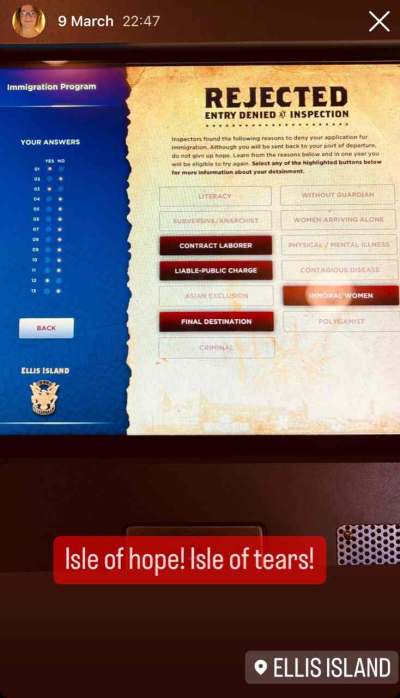
Ellis Island: Isle of hope! Isle of tears!

Once inside, they waited 3 – 7 hours for inspection – medical and legal. If any doubts appeared anywhere along the test regime, you had to submit to further testing. Meanwhile, you waited. And waited.
In fact, some waited long enough to be born here: 355 babies saw their first light of day on Ellis Island, including little Sam Katz.

Others waited long enough to die: more than 3,500 people took their last breath here, 1,400 of them children.
Hurdle no 1: Medical
1st and 2nd class passengers were examined on the boat; the less fortunate, aka steerage, on Ellis Island. First came the medical inspections. Doctors scanned the queue.
Were you the picture of health? Move on. Did you look ill? Then, doc marked you with chalk and sent you for a proper check.
Were you healthy, despite looking a bit worse for wear? All good. Move on to legal.
Not so healthy? Then off to hospital, where you were taken care of and observed.
Did you recover? First hurdle passed for you, too. Onwards to legal with you.
If you had a fatal illness or a mental illness, there was no hope. Next boat back home for you. But at least, you did not have to pay. The shipping lines were not allowed to charge you for the return journey.

The most important function of Ellis Island was to weed out the undesirables.
Hurdle no 2: Legal
At legal, you were asked a series of rapid-fire questions. Are you married or single? What is your occupation? How much money do you have? Have you ever been convicted of a crime? Do you know how to read and write? What about your morals?
If you were an anarchist or a polygamist, you were not welcome. That makes sense, I suppose.
If you were destitute, disabled or illiterate, the promised land would shut its doors in your face. Bit more cruel, that, isn’t it?
And if you were a woman, god help you. Or rather, man help you.
Women on Ellis Island
Were you immoral?
The importation into the United States of any woman or girl for the purposes of prostitution is hereby forbidden.
US Immigration Act of 1903
Did you perhaps arrive in the United States of America by yourself? Not chained to a man?
Chances are very strong, you would be labelled an LPC – likely to become a public charge. The presumption was that whilst men could take care of themselves, women likely could not. So back home with you. And if you wanted to give it another try, you had better arrive attached to a human with a male body.
Likely!! We’re talking some serious prejudice here, aren’t we?
Annie, first down the gangplank
This 17-year-old Irish lass was one of the lucky ones. Perhaps it helped to be first off the boat.
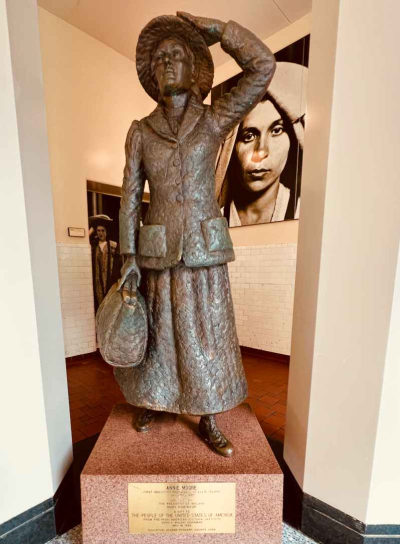
Annie Moore arrived on the S/S Nevada and was the first immigrant to be processed through Ellis Island. She stepped off the ship on New Years Day 1892, with her two younger brothers.
Would I be worthy? Would you?
I would probably arrive on my own – and get in trouble. Would have to be crafty, dazzle’em with brilliance.
All in all, about two percent did not pass muster here on Ellis Island. Does not sound like much, does it? But that could mean more than 1,000 in a month. 1,000 human beings, who had to turn around and begin the long painful journey back home.

Unlike those 2%, I am very happy to get back on the boat – Miss New York, this time – then onwards to JFK, leaving the USA entirely voluntarily. And appreciating the fact that I am here on earth in a much easier time.

Statue of Liberty is a UNESCO World Heritage site.
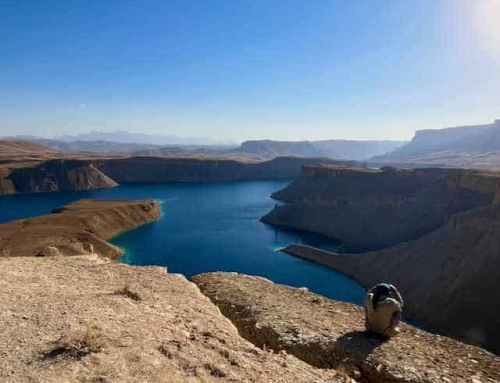
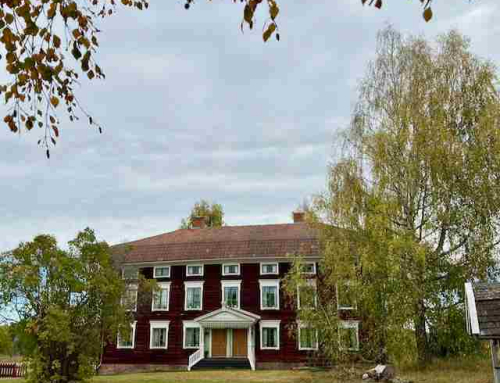
Here are more UNESCO World Heritage sites around the world.




I just read your blog post about Ellis Island and Lady Liberty and I was so inspired! It’s amazing to think about all the people who came to America through Ellis Island, seeking a better life. I would love to visit Ellis Island one day and learn more about its history. Thank you for sharing this wonderful post!
Thanks for stopping by 🙂
Ellis Island in New York, USA, stands as a poignant symbol of America’s immigrant history. Exploring its halls was a humbling experience that enriched my understanding of the nation’s diverse heritage.